• Calculations

    The algorithm slips her
    videos of smiling monkeys,
    confused cats, dancing frogs,
    and dogs speaking of bacon.

    She glimpses reels by
    the Metropolitan Opera,
    the Freelancers Union, and
    Encyclopaedia Britannica,
    but skips ahead to

    Heart some snakes in wigs,
    erratic emus, a pig named Bikini,
    cockatoos flapping to Queen,
    her pocket-sized theater of the absurd.

    Deadline unmet, errand not run, and
    the room echoes with her laughter.

    Susan Thomsen, Draft 2025

    *****

    This week Donika Kelly's "Poem to Remind Myself of the Natural Order of Things," a serious work with a powerful turn, inspires us to use something we saw online (a meme, a popular Internet video, etc.) and write from there. Others are giving this prompt a go, too; I am keeping a list here. You will ❤️ these poems.

    Michelle Kogan
    Karen Edmisten
    Linda Mitchell
    Mary Lee Hahn
    Margaret Simon
    Patricia J. Franz
    Tanita S. Davis

    Plus, there's more! See Carol Labuzzetta's blog The Apples in My Orchard for the entire Poetry Friday roundup on November 14th.

    “Dromaius novaehollandiae—Maroparque,” by H. Zell. Via Wikimedia Commons. Used under a Creative Commons Attribution Share-Alike license.

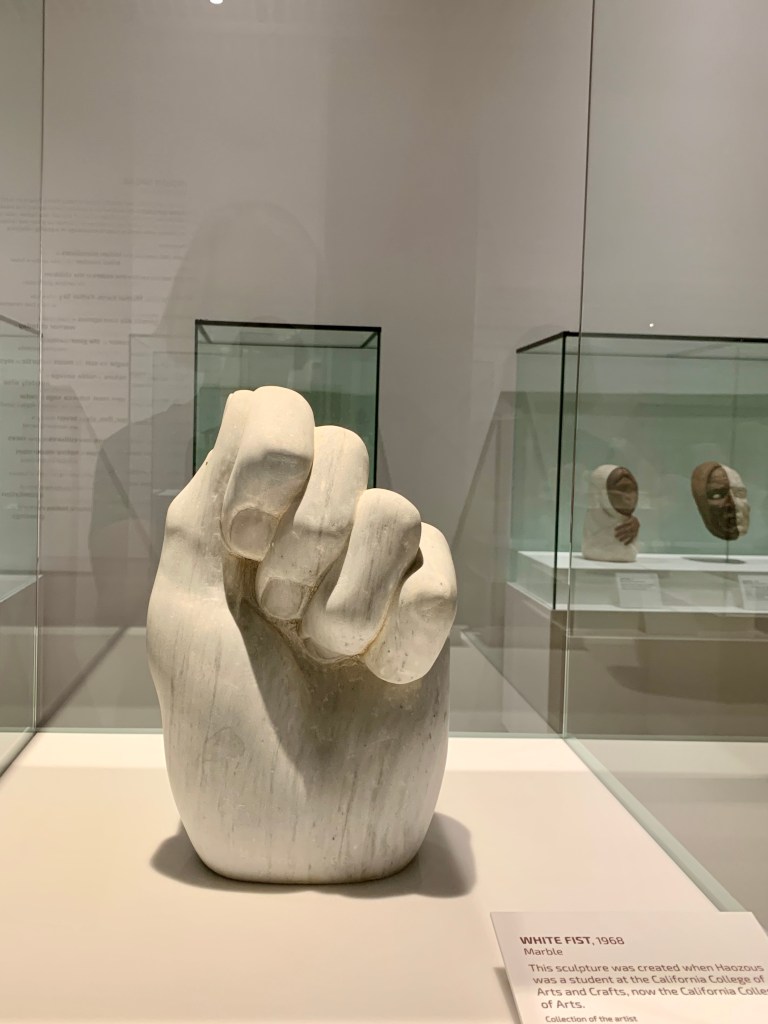
  • “White Fist” (1968) by Bob Haozous, part of “Bob Haozous: A Retrospective View,” at the Heard Museum, Phoenix

    This week’s poem is “Making a Fist,” by Naomi Shihab Nye. It begins,

    For the first time, on the road north of Tampico,
    I felt the life sliding out of me,
    a drum in the desert, harder and harder to hear.

    You can read the rest of the poem at the Academy of American Poets.

    “Making a Fist” is one of the first poems I read in a creative writing class at Columbia many years ago. I attended as a continuing-education student, and it has stayed with me all this time. In fact, I used the anthology it appeared in as the source for a cento that was published at Unlost, which includes a line from “Making a Fist.” The Columbia class was foundational in helping me drop my defensive “I don’t get it” approach to poetry. Worlds opened up! When I saw Bob Haozous’s sculpture “White Fist,” above, at the Heard Museum of Native American art, I made an immediate link to the Nye work.

    “Bob Haozous: A Retrospective View” continues through November 30th at the Heard. I highly recommend a visit.

    Poetry Friday is a longstanding tradition that began in the early days of the children’s book blogs, inspired by something similar among academic bloggers. (Shout-out to Grinnell professor Kelly Herold!) Everyone is welcome to join in. You’ll find a mix of subjects: original poetry (for kids, for adults), links to other poems, and other poetic adventures. You can read more about this fun weekly practice here and here. The Poetry Friday roundup for November 7th is at author Laura Purdie Salas’s place.

    *****

    Reminder: Next week several of us are attempting to walk in poet Donika Kelly’s footsteps; we’re responding to a meme or popular Internet video. Kelly’s poem is a serious piece with a fabulous turn at the end. Do join in if this appeals to you! I’ll publish my poem on Friday, November 14th. See last week’s post with additional details and a link to the mentor poem.

    Photo by Susan Thomsen

  • Inspired by some viral videos, the poet Donika Kelly wrote about hippos. Sort of. The Poetry Society of America shares her “Poem to Remind Myself of the Natural Order of Things” and a short essay about its origins. Great mentor poem and text to try out! Who’s with me? I’ll aim for the Poetry Friday two weeks from now.

    This week’s Poetry Friday roundup is at Jone Rush MacCulloch’s place.

    Photo by Susan Thomsen.

  • Thanks for talking about Camille T. Dungy’s “Characteristics of Life” with me last week. Your comments were helpful in interpreting the poem, and I’m still thinking about it. Dungy’s phrase “filter and filter and filter all day,” relating to the moon jelly’s (and, surely, a poet’s) task, brought to mind another poem, Lorine Niedecker’s “Poet’s work,” also available to read at the Poetry Foundation. “No layoff/from this/condensery,” she writes. That condensing sounds a lot like filtering to me! Niedecker’s poem enacts its subject; it’s quite short, the lines consist of four syllables at the most, and she drops at least one article.

    Which leads me to Susan Orlean, who writes much longer pieces. The New Yorker staff writer and author of ten books of nonfiction mentions in a new memoir, Joyride, that in college she wrote poetry. “Writing poetry might seem at odds with my eventual career path, but I see it as connected. I loved the music of words and the economy of expression and the lapidary precision of poetry, and that stuck with me when I turned to writing nonfiction.” Quoting more would lead me into copyright-violation territory, so I highly recommend reading the whole book, which is mostly about writing and includes behind-the-scene looks at some of this brilliant writer’s most well-known works.

    It’s the best feeling when the things I’m reading talk to each other.

    The Poetry Friday roundup is at Patricia J. Franz’s Reverie blog on October 24th.

    Photo by Susan Thomsen.

  • I really like the work of the poet Camille T. Dungy, and want to read more of it. Her nonfiction book Soil: The Story of a Black Mother’s Garden is excellent, as is Black Nature: Four Centuries of African American Nature Poetry, which she edited.

    So, the poem I chose today is Dungy’s “Characteristics of Life” from 2017, available to read at the Poetry Foundation. The images and ideas in here delight me, even though I’m not quite sure who the “you with the candle” is at the end. What do you all think?

    The Poetry Friday roundup is at Sarah Grace Tuttle’s blog today.

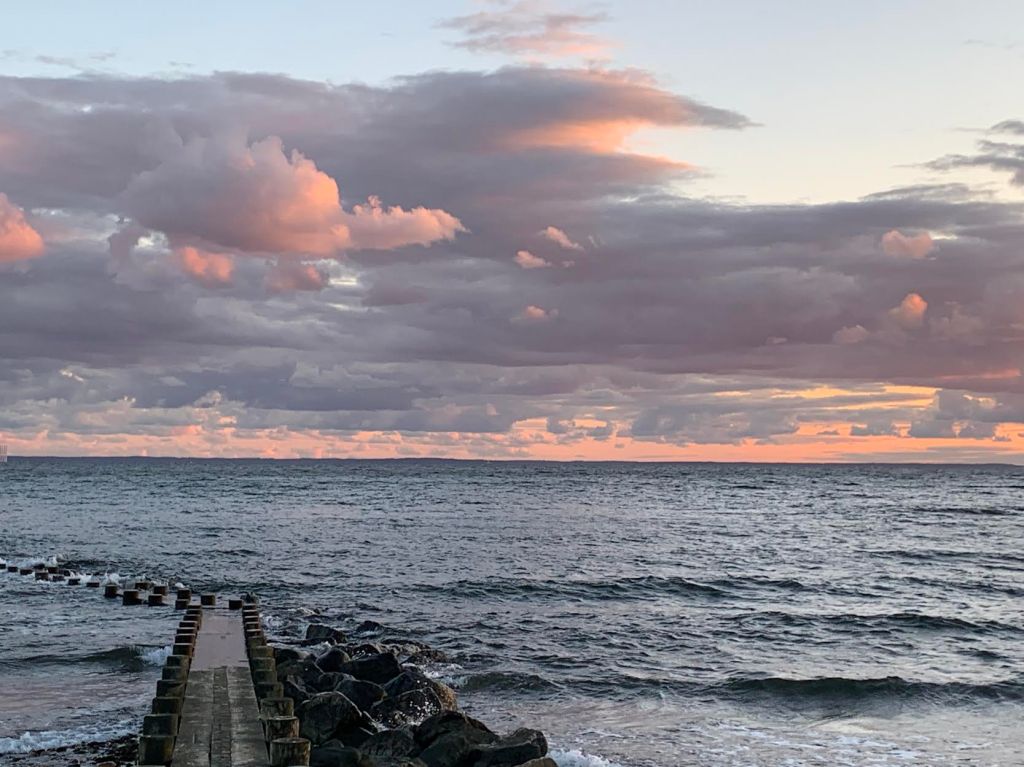
  • Four people in bathing suits,

    including a tan man in a thong, 

    American herring gulls and a Ring-billed gull,

    Double-crested cormorants standing guard on the jetty,

    Footprints in the sand,

    My own earbud on the ground too many times,

    A Northern mockingbird, 

    A sign saying the snack bar is open 

    (It wasn’t.),

    Chestnut hunters, and a man with a stick,

    A birthday ribbon in the dirt,

    One lobster boat,

    A flat Long Island Sound,

    Doldrums for a sailor, and

    Perfect for water skiing,

    Should one be so inclined.

    *****

    An aspect of participating in Poetry Friday that I especially enjoy is that it puts me in a poetic frame of mind, and one thing leads to another. In this case, I was taking a walk at the nearby state park and started taking pictures of flowers with my phone. That turned into collecting other images in my head, and when I got back to the car, I scribbled everything down on an envelope. Lists, process, projects, themes, ways in: all fun things to think about when you’re looking around with the Poetry Friday lens.

    An earlier version of this post, with additional photos, appeared on Instagram. You’ll find the Poetry Friday roundup at Matt Forrest Esenwine’s blog today.


  • The last poetry project I started was to create poems from newspaper headlines, and after a couple of months, I just couldn’t stand it any more. What’s the Kenny Rogers line? Know when to fold ’em…know when to run? I ran.

    Poetry and I did not keep steady company over the spring and summer, for no good reason other than that I was burying my head in the sand, but I did read and loved Elaine Equi’s collection Out of the Blank (Coffee House Press, 2025). Ben Shields writes in Artforum that Equi, “a staple of the New York downtown scene,” uses “language, casual enough for a napkin, [and] leaves you with the impression that you’ve just been told a delicious, unshackling secret.” What a lovely description!

    For a sample of Equi’s style, I recommend “Muffin of Sunsets” and other poems at the Academy of American Poets. I’m looking forward to reading more of her books, too, now that I have summoned up a modicum of personal organization.

    This is the first new post on WordPress, where I moved the blog after Typepad announced its denouement. Welcome to the new home of Chicken Spaghetti! You’ll find more Poetry Friday posts at The Poem Farm today. It’s good to be back.

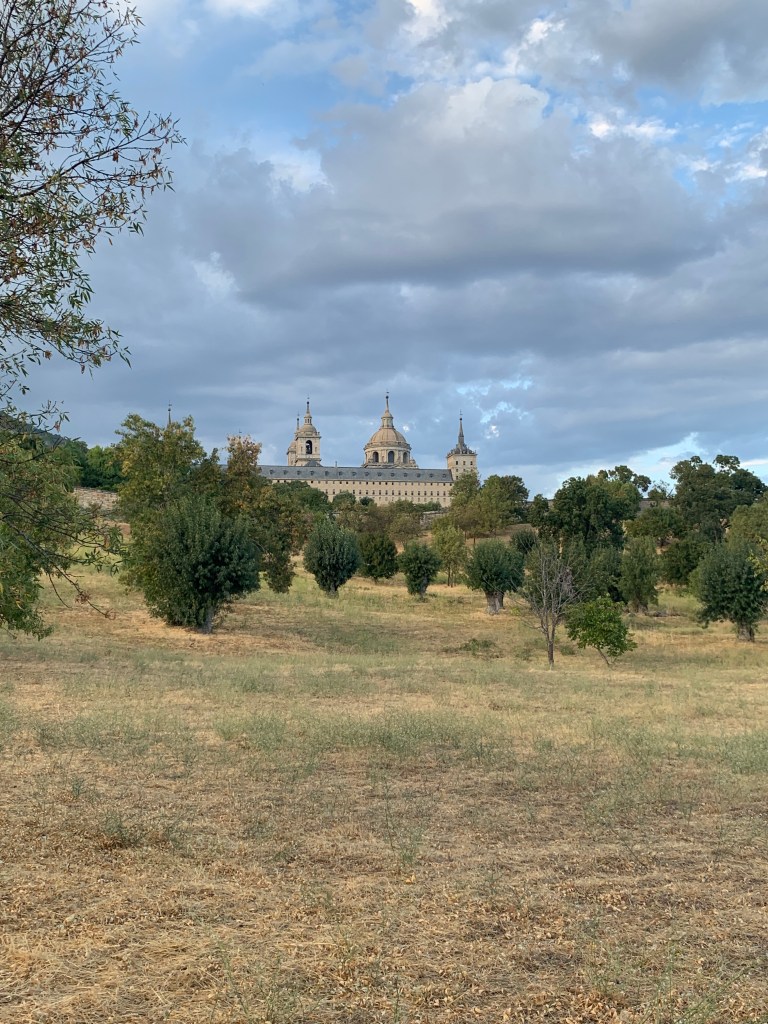
    Photo by ST. Madrid, 2025.

  • E558B16D-C5BD-42F5-A249-6C3560F7B669

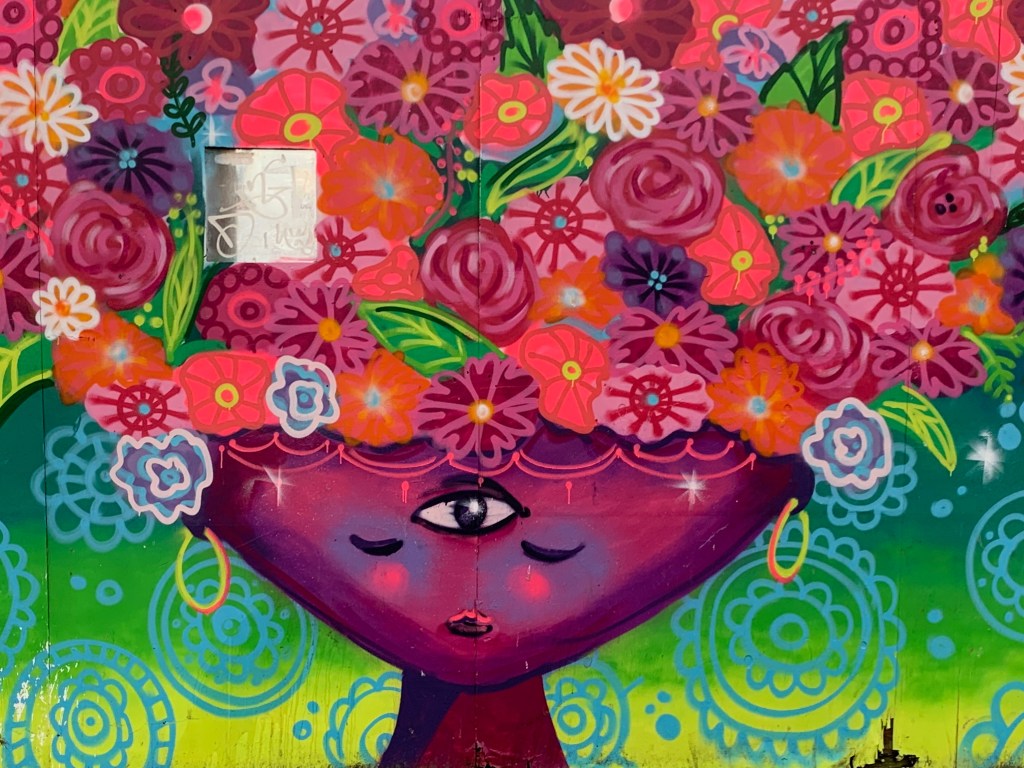
    Mural by Sara Erenthal, Allen Street, New York, New York. Photo by Susan Thomsen, 2020.

    Today's bit of poetry goodness is the February 26th, 2025, edition of the New Yorker's Poetry Podcast in which Jericho Brown reads a work by Elizabeth Alexander ("When") and one of his own ("Colosseum.") He tells poetry editor Kevin Young, "Every poem is a love poem because somebody just had to write it down. Somebody just had to get it right, and it was out of love, of that moment of writing, out of love for that poem itself…" I highly recommend listening to the interview and readings.

    Another of Brown's poems that I like is "'N'Em." You can read it at the New York Times Magazine.

    *****

    The Poetry Friday roundup is at Margaret Simon's Reflections on the Teche. Margaret and I grew up in the same hometown and even attended the same church as kids. Small world, right? She's such a thoughtful, talented writer. Go visit!

  • Latin_dictionary

    Definitions

    Break is a word
    That kicks at the end,
    With legs of a K
    Severing ties,
    Though it begins
    With a buxom, promising B.

    Break can be rest,
    Pause measured by coffee,
    Perhaps in class,
    Perhaps at the office,
    A siesta of sorts
    As darkness drops in.

    Break is a verb
    Employed against horses,
    Stomping spirits,
    Rupturing traditions,
    Punting friends,
    Into dangerous orbits.

    Mend is a word
    That fixes the break,
    That sets the bone,
    That patches the hole.
    Mend offers a hand
    And does not let go.

    How is the adverb,
    How is the work.

    Draft, Susan Thomsen 2025

    *****

    A month ago the Poetry Sisters offered a challenge for February: to create a "__ Is a Word" poem, a form invented by Nikki Grimes and shared by Michelle Barnes. (Thank you to Tanita S. Davis for the background.) The above, a very rough draft, is what I came up with. Should I keep the last two lines or set them free?

    The Poetry Friday roundup for February 28th is at Denise Krebs' blog.

    Image: Latin dictionary photo by Dr. Marcus Gossler, used under the license Creative Commons Attribution-Share Alike 3.0. Source: Wikimedia Commons.

  • IMG_4928

    Thank you to Claude McKay (1889-1948) for the following and its title, both of which remind me that one day we'll be done with this interminable winter season. There will be an "after." Bring on the droning bees and the ferns! (See also  Yeats's "Lake Isle of Innisfree" for more bees.) I found the McKay at poets.org, the site of the Academy of American Poets, and it is in the public domain. The Poetry Friday roundup today is at author Laura Purdie Salas's blog. Edited to add: don't miss Tanita Davis's look at McKay's "If We Must Die" over at her place, Fiction, Instead of Lies.

    *****

    After the Winter

    by Claude McKay 

    Some day, when trees have shed their leaves
        And against the morning’s white
    The shivering birds beneath the eaves
        Have sheltered for the night,
    We’ll turn our faces southward, love,
        Toward the summer isle
    Where bamboos spire to shafted grove
        And wide-mouthed orchids smile.

    And we will seek the quiet hill
        Where towers the cotton tree,
    And leaps the laughing crystal rill,
        And works the droning bee.
    And we will build a cottage there
        Beside an open glade,
    With black-ribbed blue-bells blowing near,
        And ferns that never fade.


    Photo by Susan Thomsen