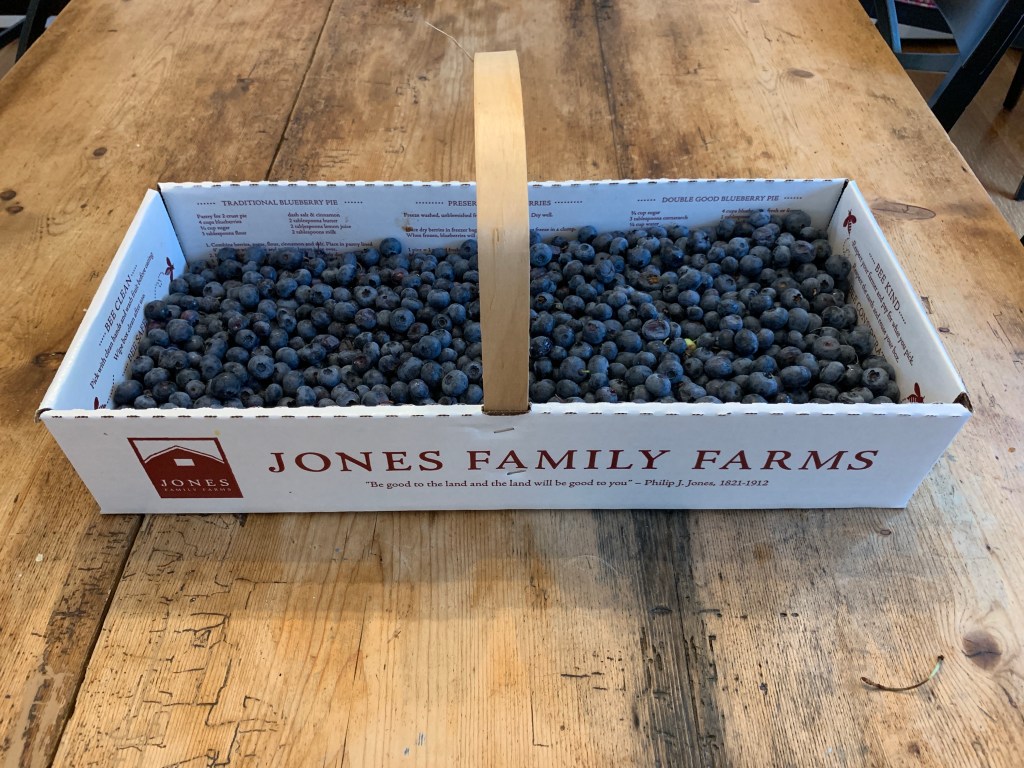
• Chen Chen told the Yale Review that he usually starts a poem with the title. I love his “Tale of the Blueberries” and his words about the process of creating, “picking up an odd clue here, an ordinary mystery there.”

    Titles often elude me, so just for fun (and inspiration), I looked through the Yale Review‘s Poems of the Week for recent ones, and found many that appealed, including “Fan Mail from Some Flounder?” (Harryette Mullen), “Pearly Everlasting” (Alissa Quart), “Literal Country Music” (Samuel Cheney), and “In My Terrible Years” (Aldo Amparán).

    For February 20th, I have written to a prompt from David Lehman (of the Best American Poetry series): begin a poem with the last line of Walt Whitman’s “Song of Myself, ” which is “I stop somewhere waiting for you.” Do join me if you’d like. I even asked AI to suggest titles for this poem, but they were SEO-oriented duds. Stay tuned.

    The Poetry Friday roundup for February 6th is at Molly Hogan’s Nix the Comfort Zone.

    Photo by Susan Thomsen
  • John Ashbery’s poem “A Worldly Country” (links below) initially ran in the November 7th, 2005, issue of the New Yorker, and this week it’s the subject of the magazine’s poetry podcast with the host (and poetry editor) Kevin Young and his guest, the poet April Bernard. She chose the Ashbery to read and talk about, noting “I love the way that he’s so hard to understand but when you’re in the middle of his poem, it makes perfect sense—even if you couldn’t possibly paraphrase it to anyone else.” She and Young also liken this poem and other Ashbery works to collage. The rhyming couplets provide footholds for us readers if we don’t know quite where we are.

    I really appreciate that approach to poetry that might seem difficult at first. To be kind of simple about it, just jump in. That’s what I did and took pleasure in all the crazy images whirling by. And there’s more to it, of course. Even though it was published more than twenty years ago, “A Worldly Country” is timely; Bernard says it talks about “how the chaos in the outer world comes into the inner world.”

    After the Ashbery discussion, Bernard reads her poem “Beagle or Something” (April 23, 2007, issue) and among other topics, talks about the role of play in poetry. I laughed when she told Young that she made up several composers’ names and titles of works in Romanticism, the book the poem appears in. I didn’t know Bernard’s poetry before the podcast; Romanticism is now on the list for my library errands tomorrow.

    Links:

    New Yorker Poetry Podcast with Kevin Young and April Bernard

    “A Worldly Country” at the Poetry Foundation. Available to read for free.

    “A Worldly Country” at the New Yorker. Subscription needed.

    PennSound recording of Ashbery himself reading a shorter version of “A Worldly Country” at the Poetry Project at St. Mark’s Church, NYC, May 14, 2009. MP3 audio. Available to listen to for free.

    Sound files of many Ashbery readings, at PennSound. Available to listen to for free.

    “Beagle or Something” and “Beagle o algo así,” a translation into Spanish by Sergio Eduardo Cruz, at Circulo de Poesía. Available to read for free.

    “Beagle or Something” at the New Yorker. Subscription needed.

    Romanticism, by April Bernard (W.W. Norton)

    The Poetry Friday roundup for January 30th is at the Poem Farm, the home of poet Amy Ludwig VanDerwater.

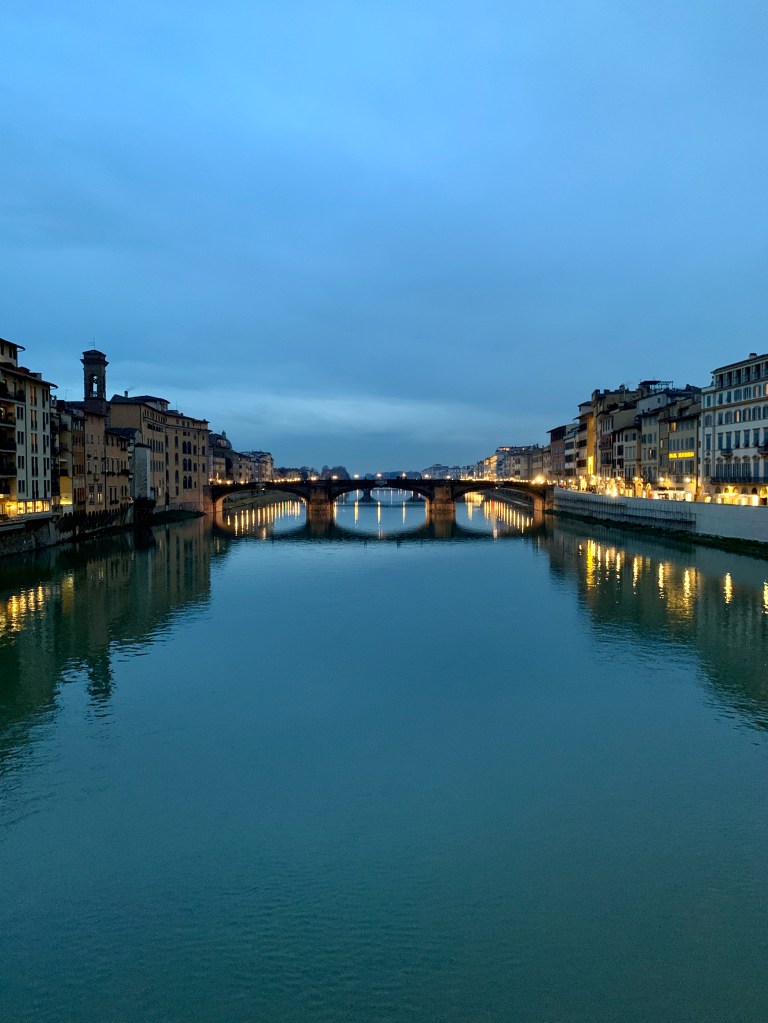
    Photo by Susan Thomsen, Arno River, Florence, Italy, 2026.

  • At the first of the year I was thinking of Walt Whitman and New York, and then somehow wandered over to the West Coast with Allen Ginsberg in San Francisco. I wonder which poem(s) Ginsberg had in mind when he wrote this line in “A Supermarket in California” (1955), “What thoughts I have of you tonight, Walt Whitman, for I walked down the sidestreets under the trees with a headache self-conscious looking at the full moon.”

    Several sources say Ginsberg is responding to Whitman’s “Song of Myself (1855), which begins, “I celebrate myself, and sing myself,/And what I assume you shall assume,/For every atom belonging to me as good belongs to you.”

    One of my favorite poetic lists appears in Ginsberg’s “Supermarket.” I don’t want to spoil anything if you haven’t read the poem yet, but the list includes avocados, peaches, and García Lorca. Speaking of whom, I should mention that the Spanish poet, too, paid homage to WW in “Ode to Walt Whitman”; an English translation appeared in Poetry in 1955. (Ben Belitt was the translator.)

    ¡Hay mas! There’s more. If you have a New Yorker subscription, you can read Ariel Francisco’s modern-day ode to García Lorca’s ode: “Along the East River and in the Bronx Young Men Were Singing” (March 11, 2019). I recommend Francisco’s book A Sinking Ship Is Still a Ship, and want to read his others.

    This Whitman chasing just might be endless. The next stop found me in Chile, with Martín Espada’s translation of Pablo Neruda’s “Ode to Walt Whitman,” over at the University of Pennsylvania publication Jacket 2. I love these short lines. “But/your voice/sings/in the train stations/on the edge of town.”

    Given the news lately, I recommend following a poet around for a while. Doing so sure helped my state of mind.

    The Poetry Friday roundup on January 23rd at Tabatha Yeatts’ place, The Opposite of Indifference. On February 20th, I’m going to try a prompt and post a Whitman-inspired poem, too. Please join me if you would like to! The details are here.

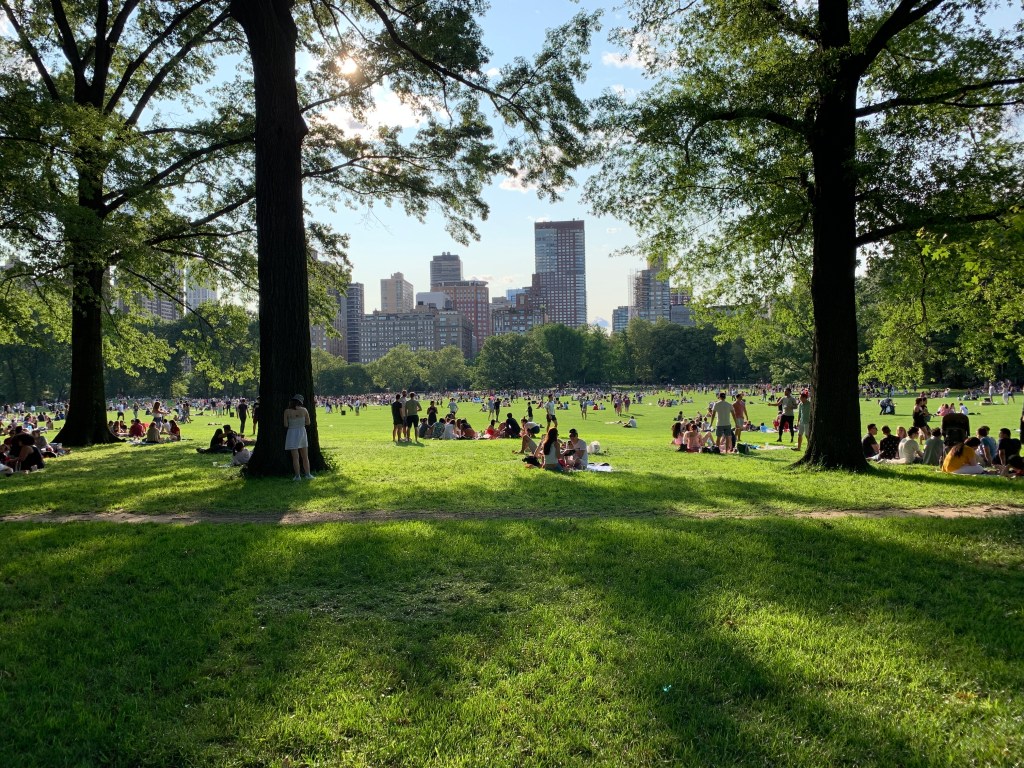
    Photo by Susan Thomsen. Sheep Meadow, Central Park, 2019.

  • David Lehman mentions a poetry prompt in his intro to The Best American Poetry 2025 that intrigued me, and that is to write a short poem starting with the final line of Whitman’s “Song of Myself”: “I stop somewhere waiting for you.” Back in 2016 at the American Scholar, Lehman held a little contest with the same prompt, and I look forward to reading the winners after I come up with my own poem. (I don’t want to lift anyone’s line inadvertently!)

    Please join me if you would like to. I’m planning to post a “I stop somewhere waiting for you”-inspired poem on Friday, February 20th.

  • “The Republic of Poetry,” by Martín Espada, begins,

    In the republic of poetry,
    a train full of poets
    rolls south in the rain
    as plum trees rock
    and horses kick the air,

    To read the rest, go to poets.org

    Don't you wish we lived in such a republic? Gosh, I love this poem. I came across it while reading around in Latino Poetry: The Library of America Anthology, edited by Rigoberto González. The anthology features "[m]ore than 180 poets, spanning from the 17th century to today...," , as the LOA website says.

    The Poetry Friday roundup is at Michelle Kogan's place, MoreArt4All, on December 19th. Go, visit. You're sure to see some fine art over there, too.

    Happy holidays to all!

    Photo by Susan Thomsen

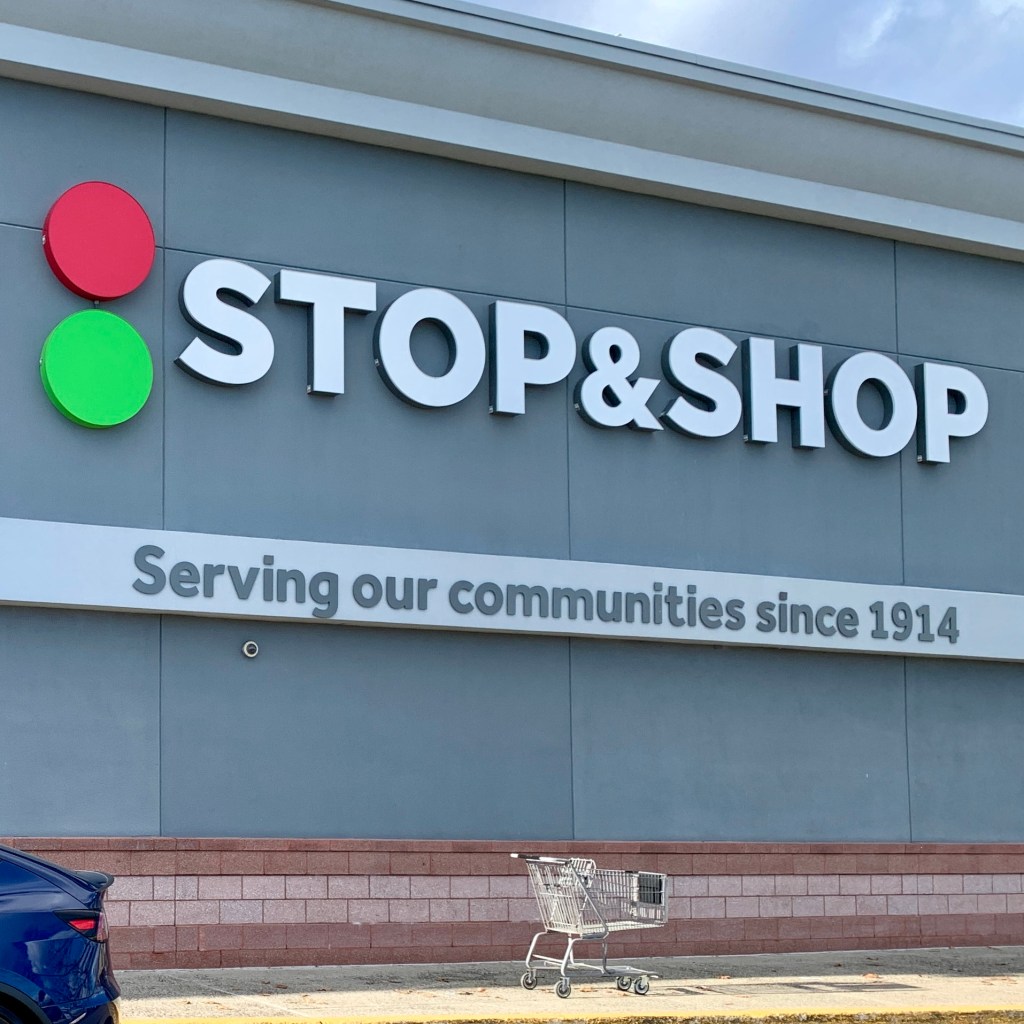
  • I’m about two-thirds of the way through the excellent anthology The Best American Poetry 2025 (Terence Winch, editor), and so far Jill McDonough’s “What We Are For” is my favorite poem, winning my heart with its mentions of “Stop & Shop” (a grocery store chain here in the northeast), “turquoise sparkle nails,” “fuzzy baby bee,” “the lady cop in line,” and more.

    Luckily for folks who may not have a copy of the book at hand, you can read McDonough’s poem online at the Threepenny Review, where it originally appeared in the Winter 2024 issue. If this work doesn’t make you think of the E.M. Forster epigraph “only connect,” I’d would be surprised.

    The “Best American Poetry” series is coming to a close with this 2025 volume. Elisa Gabbert wrote about it for the New York Times. Here is a gift link to her essay. (“Reading through my stack of ‘BAP’s, I was struck by the randomness of it all.”) Gabbert’s own best of the year list can be found at the New York Times.

    On December 12th, the Poetry Friday roundup is at Linda Mitchell’s blog, A Word Edgewise.

    In keeping with the “best” theme, here are some lists of best poetry books of the year:

    Best of the Net/Sundress Publications (individual poems, not books)

    California Review of Books

    CBC (Canadian poetry)

    Debutiful (débuts)

    Electric Lit

    The Guardian

    Largehearted Boy. See also Largehearted Boy’s ginormous list of all the “Best Books of 2025.”

    Ms.

    New York Public Library

    New York Times

    NPR

    Publishers Weekly

    School Library Journal

    Photo by Susan Thomsen

  • Paige Lewis’s poem “I’m Not Faking My Astonishment, Honest,” begins, “Looking out over the cliff, we’re overwhelmed/by a sky that seems to heap danger upon us,” and you can read the rest of it at poets.org. I listened to the accompanying Poem-a-Day audio and laughed at her explanation. The poem does feature an overheard line, like we were talking about last week, but that aspect does not figure in the origin story Lewis tells, though clearly the verse is important. You’ll see.

    I hope you’ll talk about the poem’s ending with me in the comments. What do you make of the last question?

    The Poetry Friday roundup is at Irene Latham’s place on December 5th.

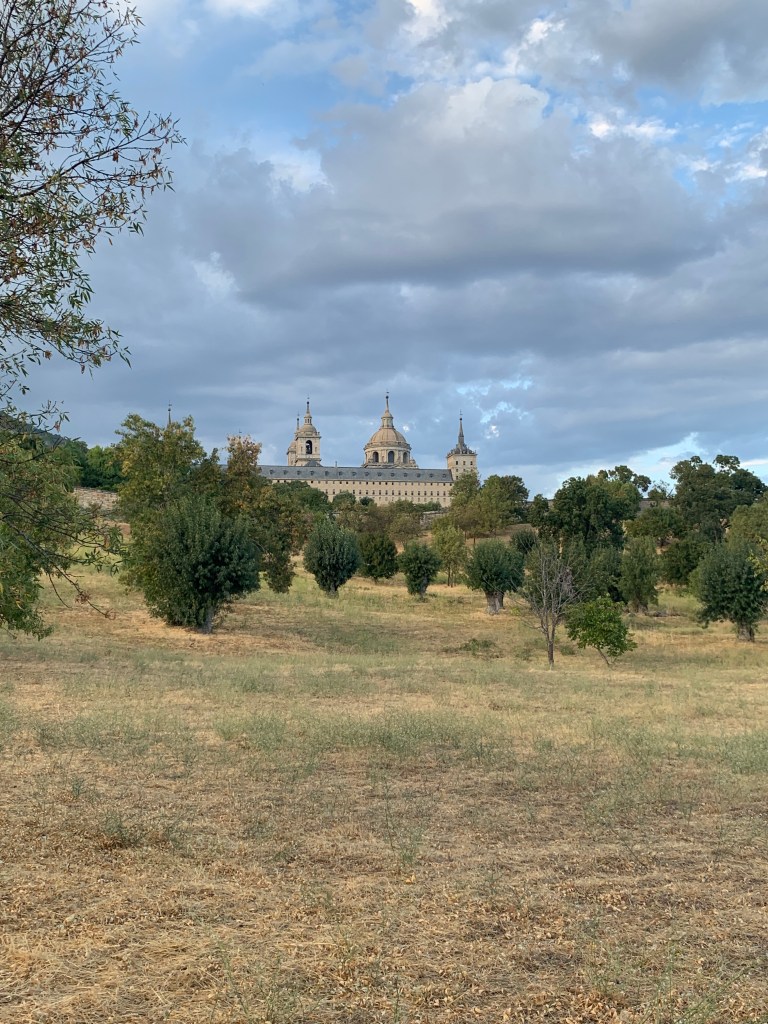
    Photo by Susan Thomsen. San Lorenzo de El Escorial, Spain, 2025.


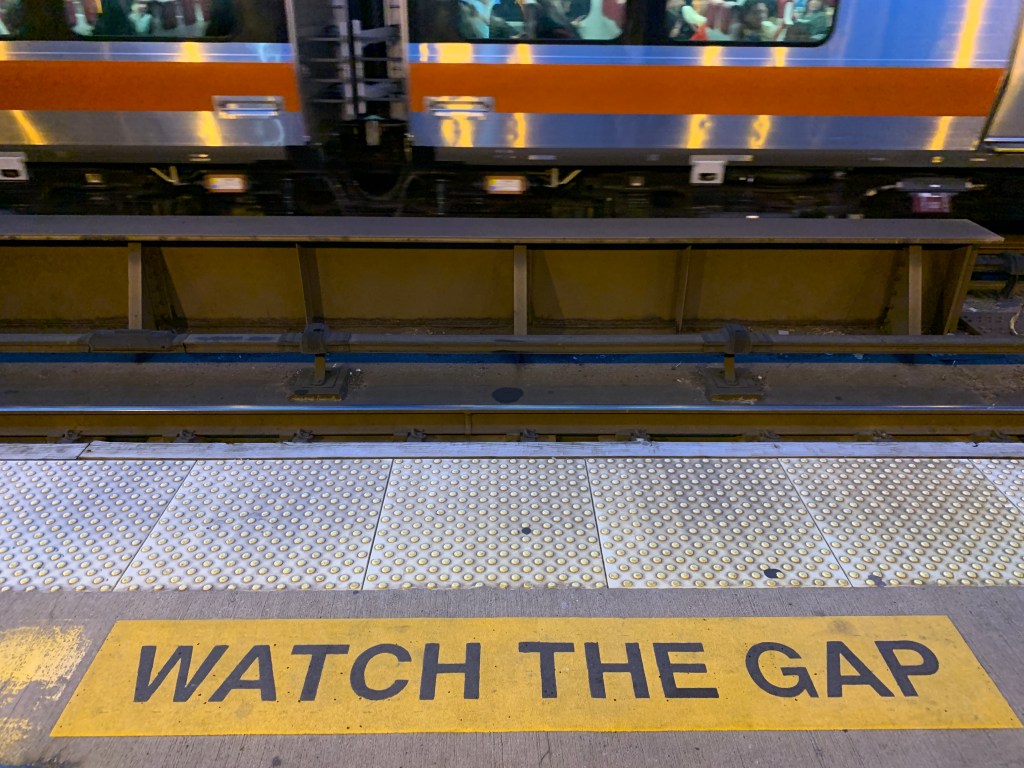
  • Watch the Gap
    A New York found-language poem

    The next station is—
    Nathan, sit down,
    Jingle bells jingle bells,
    Jingle all the way,
    Mommy, that's my school!
    This is perfect sweater weather,
    Shop and save, shop and save,
    Fifteen dollars for an omelette?
    I’m sitting on a huge pile of equity,
    Will you stop? I’m eating,
    You get to go to this beautiful place,
    It’s not my beautiful place,
    The Rolls Royce of all the islands,
    I’m bored to death,
    Likewise. Keep in touch,
    Please exit through the rear door.

    Susan Thomsen, draft 2025

    The Poetry Sisters collective invited everyone to write an "overheard and eavesdropped" poem for this Friday, and this is one I had on ice, waiting for the right time. Voilà! It's composed entirely of things I heard in New York; I live close by and am there often. I write the lines down on paper (using the phone is too clumsy and time-consuming), and eventually transfer these scrawled "verses" onto the computer. When I have a lot, I pick and choose and rearrange them into shape. A while back I wrote a guide for creating these poems.

    "Nathan," whoever he may be, was bouncing up and down on a MetroNorth train. Until I started making this kind of poem, I had not thought about how much instruction riders of public transportation receive, usually from the PA system but also from parents, fellow passengers, conductors, and others.

    The Poetry Friday roundup for November 30th is at author Buffy Silverman’s blog.

    Photos by Susan Thomsen. The mural in the lower photo is by Laura Alvarez, @bigeyesworld on Instagram.

  • This is a repost of a guide that I lost when I had to move from Typepad; I just threw everything into the truck and didn’t check all the closets. By “street poems,” I mean poems of overheard conversations and soliloquies. Found-language poems, like “Now or Later” at Street Cake; scroll down to see it. I like to collect my verses in New York, but you can do this anywhere. To be clear, you can make up your own rules, too. These are mine.

    A guide to composing street poems

    In cities we are used to blocking out what is not necessary for us to know getting from Point A to Point B, but unblocking is the first step to listening for lines.

    Material must come from people you don’t know. You may use questions strangers ask you directly and things they say to you. Those are fine.

    You can’t make up any sentences, but you can break them up and add conjunctions if you like. It’s permissible to remove uhs, likes, ums, sos, etc. 

    Walk slowly and stop often. Take the train and the bus. Eat by yourself. Drink coffee alone. Linger by the information booth. The people nearby are your collaborators.

    Take care with names. Your goal is a poem, not libel.

    Honor your collaborators. Remember what Grace Paley said, something along the lines of, “Every character deserves the open destiny of life.”

    Keep an ear out for loud, one-sided cell-phone conversations. 

    If you hear something that makes you think, “I want to hear the rest of that story,” that kind of line is gold.

    The more languages you know, the better. Include non-English verses in a regular font, not italics.

    Announcements, transit and otherwise, are always welcome. You will hear a lot of announcements. 

    Cursing is okay but only in moderation. Same with snooty remarks.

    Fill up a big cache of lines before you start putting together the poem. That way, they’ll rumble around in your head for a while and make connections on their own.

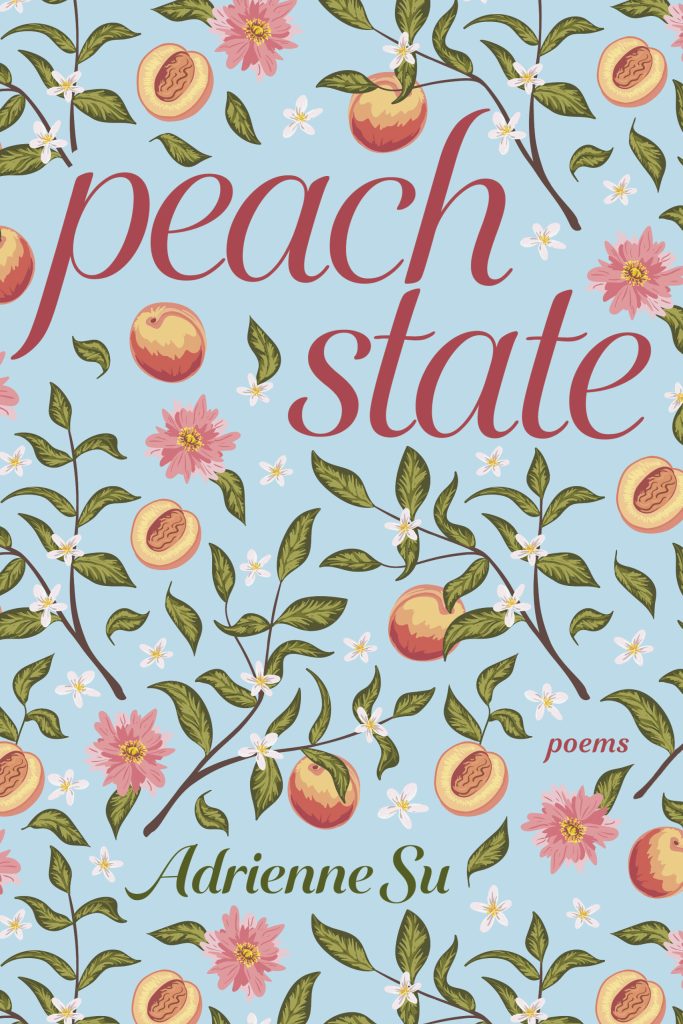
  • Today’s poem is by Adrienne Su, whose book Peach State I read and loved several years ago. “Peaches” begins,

    A crate of peaches straight from the farm
    has to be maintained, or eaten in days.
    Obvious, but in my family, they went so fast,
    I never saw the mess that punishes delay.

    Read the rest online at the Academy of American Poets (poets.org).

    On her website, Su, a professor of creative writing at Dickinson College, mentions an online course “Writing into Appetite, Appetite into Writing,” which was postponed from this fall to the spring of 2026. That sounds really tempting.

    The Poetry Friday roundup is at Janet Scully’s blog, Salt City Verse, on November 21st. Next week the Poetry Pals are writing “eavesdropped and overheard” poems; see Tanita S. Davis’s blog for details. As usual for this friendly group, they invited everyone to join in, and I’m so excited that I want to post right now. But I’ll wait and proofread my contribution so that it will be ripe enough for the harvest on the 28th.

    I borrowed the image of the Peach State cover from its publisher, the University of Pittsburgh Press.